
- Specialities
- Gynaecology
- Aesthetics
- Ophthalmology
- Urology
- Vascular
- Ent
- Proctology
- Orthopedics
- Laparoscopy
 080-6510-5170
Varicocele Treatment in Bhongir
Treatment & Care
Effective varicocele treatment in Bhongir using minimally invasive techniques, offering high success rates and faster recovery in most cases.

 Call Us: 080-6510-5170
Varicocele Treatment in Bhongir
Varicocele is an enlargement of veins within the scrotum that can affect fertility and cause discomfort. In Bhongir, advanced varicocele treatment is available using minimally invasive techniques, including laparoscopic and microsurgical approaches, offering effective relief with high success rates. Early diagnosis and timely intervention can help improve sperm quality and reduce associated symptoms. Most patients resume routine activities within a few days following treatment. Our patient-centric approach ensures personalised care using safe, modern methods tailored to individual needs.
Warning Signs of Varicocele
Recognise early symptoms of varicocele to seek timely medical evaluation and effective treatment.

Scrotal Discomfort
Dull ache or heaviness in scrotum.

Visible Veins
Enlarged, twisted veins near testicle.

Testicular Atrophy
Noticeable shrinkage of one testicle.

Fertility Concerns
Reduced sperm count or poor quality.

Pain on Standing
Worsening discomfort after long standing.

Low Testosterone
Fatigue and reduced hormonal function.


Warning Signs of Severe Varicocele
Seek Emergency Care Immediately if:
Seek Emergency Care Immediately if:
 Sudden severe scrotal pain needs urgent care. High fever with scrotal swelling seek help. Acute testicular torsion requires emergency care. Rapid scrotal enlargement needs prompt evaluation. Intense pain with nausea needs immediate care.
- Sudden severe scrotal pain needs urgent care.
- High fever with scrotal swelling seek help.
- Acute testicular torsion requires emergency care.
- Rapid scrotal enlargement needs prompt evaluation.
- Intense pain with nausea needs immediate care.
Meet Our Best Varicocele Specialists
Dr. N Abhilash
MBBS, DNB - General Surgery, FNB - Minimal Access Surgery
 Free Consultation
 14 Years Experience
 Pristyn Care Archana Hospital, Madeenaguda, Hyderabad
.jpeg/1777541472938_ban-Icon.png)
Dr. Salecha Priyank
M-CH- Urology
Free Consultation 17 Years Experience MIG-549, Rd Number 1, Kukatpally Housing Board Colony, Kukatpally, Hyderabad, Telangana 500072
Dr. Mohammed Imran
MBBS, MD-Radio Daignosis
Free Consultation 14 Years Experience First floor, Tuffah Hospital, Podium Mall, beside Tolichowki Flyover, Daulat Gulshan Colony, Janaki Nagar Colony, Toli Chowki, Hyderabad, Telangana 500028 MEDICAL INSIGHT
Causes of Varicocele
Varicocele occurs when valves inside the scrotal veins malfunction, causing blood to pool and veins to enlarge. Hormonal changes during puberty and anatomical differences may increase risk.
Left-sided varicoceles are more common due to the angle at which the left testicular vein drains into the renal vein.
 Faulty Vein Valves
 Venous Reflux
 Genetic Factor
 Hormonal Changes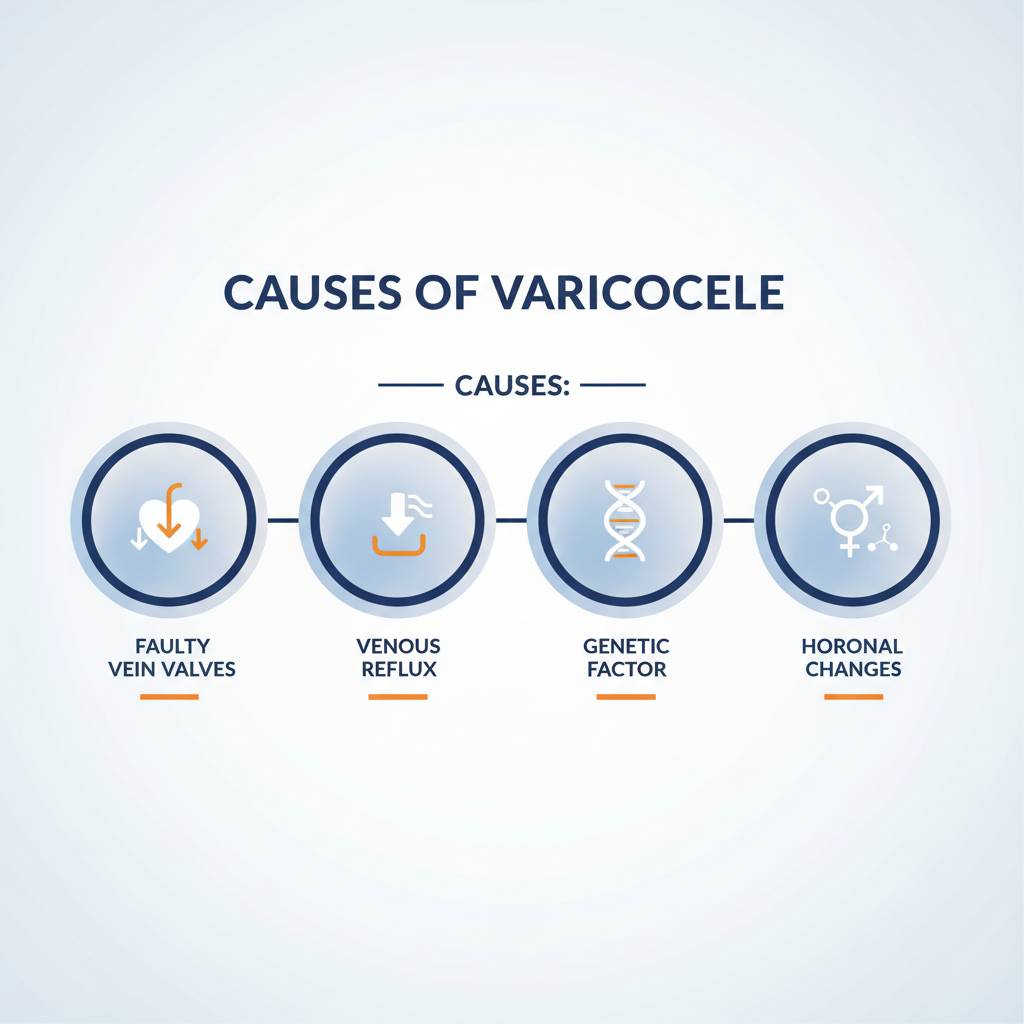
Ready to get the right care?
Who Is at Risk for Varicocele?
Certain factors may increase the likelihood of developing varicocele in males.

Adolescent Males
Varicocele most commonly develops during puberty, typically between ages 15 and 25.

Family History
A genetic predisposition may increase the risk of developing varicocele in close relatives.

Tall or Thin Build
Males with a taller or leaner body frame may have higher venous pressure, raising varicocele risk.

Fertility Concerns
Men experiencing infertility are more likely to be diagnosed with varicocele upon clinical evaluation.

The Critical Phase
Early diagnosis and evidence-based treatment can help reduce the risk of long-term complications effectively.
ALWAYS HOSPITALIZE HIGH-RISK PATIENTS
Complications
Untreated varicocele may lead to fertility issues, hormonal imbalance, and testicular atrophy over time.

Male Infertility
Varicocele impairs sperm quality and count, contributing to male infertility in many cases.

Testicular Atrophy
Prolonged varicocele may cause testicular shrinkage due to reduced blood flow and oxygen supply.

Hormonal Changes
Elevated scrotal temperature from varicocele may disrupt testosterone production over time.

 Nearest Clinic
Varicocele Treatment & Recovery
Effective, minimally invasive options to manage varicocele with faster recovery.

Surgical Care
Laparoscopic varicocelectomy offers high success rates with minimal scarring.

Embolization
Minimally invasive coil embolization blocks affected veins effectively.

Recovery Tips
Most patients resume routine activities within a few days post-procedure.


Advanced In-Patient Care
Our specialists use advanced laparoscopic techniques for varicocele repair, ensuring effective treatment and supporting faster recovery in most cases.
 CRITICAL ALERT
Avoid strenuous activity and heavy lifting for at least 1–2 weeks after treatment.
 NO Heavy Lift
 NO Hot Baths
 NO Ibuprofen
Consult a professional before any medication.
Immediate Action Required
Seek urgent care if varicocele causes severe scrotal pain or sudden swelling, as prompt evaluation helps prevent complications.
 Emergency Hotline


Prevention: Your Best Protection
Early awareness and healthy habits may help reduce varicocele risk.

Wear Support
Wearing supportive underwear may reduce scrotal vein pressure daily.

Stay Active
Regular moderate exercise supports healthy blood circulation effectively.

Avoid Strain
Limit heavy lifting to reduce abdominal pressure on pelvic veins.

Regular Checkups
Routine screenings help detect early vein changes for timely care.
What Our Patients Say
Based on 1 Recommendations | Rated 5.0 Out of 5



Your health is our
sole priority.
Need Expert Medical Consultation?
Our network of Varicocele specialists are available for immediate clinical evaluation and personalized recovery planning.

Frequently Asked Questions
Varicocele is enlargement of veins in the scrotum. Common symptoms include dull ache, swelling, or discomfort in the testicle, and it may affect fertility in some men.
Varicocele is diagnosed through physical examination and scrotal ultrasound. Doppler imaging helps confirm abnormal blood flow, allowing doctors to assess severity and plan effective treatment.
 Call Us
 Book Appointment


