
- Specialities
- Gynaecology
- Aesthetics
- Ophthalmology
- Urology
- Vascular
- Ent
- Proctology
- Orthopedics
- Laparoscopy
 080-6541-7867
Mastoidectomy Treatment in Bhongir
Treatment & Care
Expert mastoidectomy treatment in Bhongir using advanced surgical techniques for effective ear infection relief and improved hearing health outcomes.

 Call Us: 080-6541-7867
Mastoidectomy Treatment in Bhongir
Mastoidectomy is a surgical procedure performed to remove infected mastoid air cells located behind the ear, commonly required to treat chronic ear infections, cholesteatoma, or complications arising from middle ear disease. In Bhongir, patients have access to advanced mastoidectomy treatment using modern surgical techniques that prioritize safety and effective outcomes. The procedure helps restore ear health, prevent further infection spread, and protect hearing. Most patients resume routine activities within a few days following proper post-operative care. Early diagnosis and timely surgical intervention are key to achieving high success rates.
Warning Signs After Mastoidectomy
Recognize early warning signs after mastoidectomy for timely medical care and safer recovery.

Severe Ear Pain
Intense pain worsening after surgery.

High Fever
Fever above 101°F post-procedure.

Facial Weakness
Drooping or numbness on one side.

Increased Discharge
Foul-smelling fluid from the ear.

Hearing Loss
Sudden or worsening hearing changes.

Dizziness
Persistent vertigo or balance issues.


Warning Signs of Severe Mastoidectomy
Seek Emergency Care Immediately if:
Seek Emergency Care Immediately if:
 Sudden severe bleeding post-mastoidectomy. Signs of meningitis after ear surgery. Facial nerve paralysis post-procedure. High fever with neck stiffness noted. Sudden hearing loss after mastoidectomy.
- Sudden severe bleeding post-mastoidectomy.
- Signs of meningitis after ear surgery.
- Facial nerve paralysis post-procedure.
- High fever with neck stiffness noted.
- Sudden hearing loss after mastoidectomy.
Meet Our Best Mastoidectomy Specialists
.jpg/1674658718382_ban-Icon.png)
Dr. Santosh Kumar Gunapu
MBBS, MS-ENT
 Free Consultation
 16 Years Experience
 Kukatpally Housing Board Colony, Kukatpally, Hyderabad
Dr. Vidya H
MBBS, MS-ENT
Free Consultation 15 Years Experience B Block, No 243, Kondapur Main Road, Sri Ramnagar - Block C, Rngareddy, Telangana 500086
Dr. Aslesha Annreddy
MBBS, DNB-ENT
Free Consultation 14 Years Experience Ramgopalpet, Hyderabad, Telangana 500003 MEDICAL INSIGHT
Causes of Mastoidectomy
Mastoidectomy is typically required due to chronic ear infections, cholesteatoma, or mastoiditis that spreads to the mastoid bone behind the ear.
Untreated middle ear infections can spread to mastoid cells, making surgical intervention necessary.
 Chronic Ear Infection
 Cholesteatoma
 Acute Mastoiditis
 Bone Erosion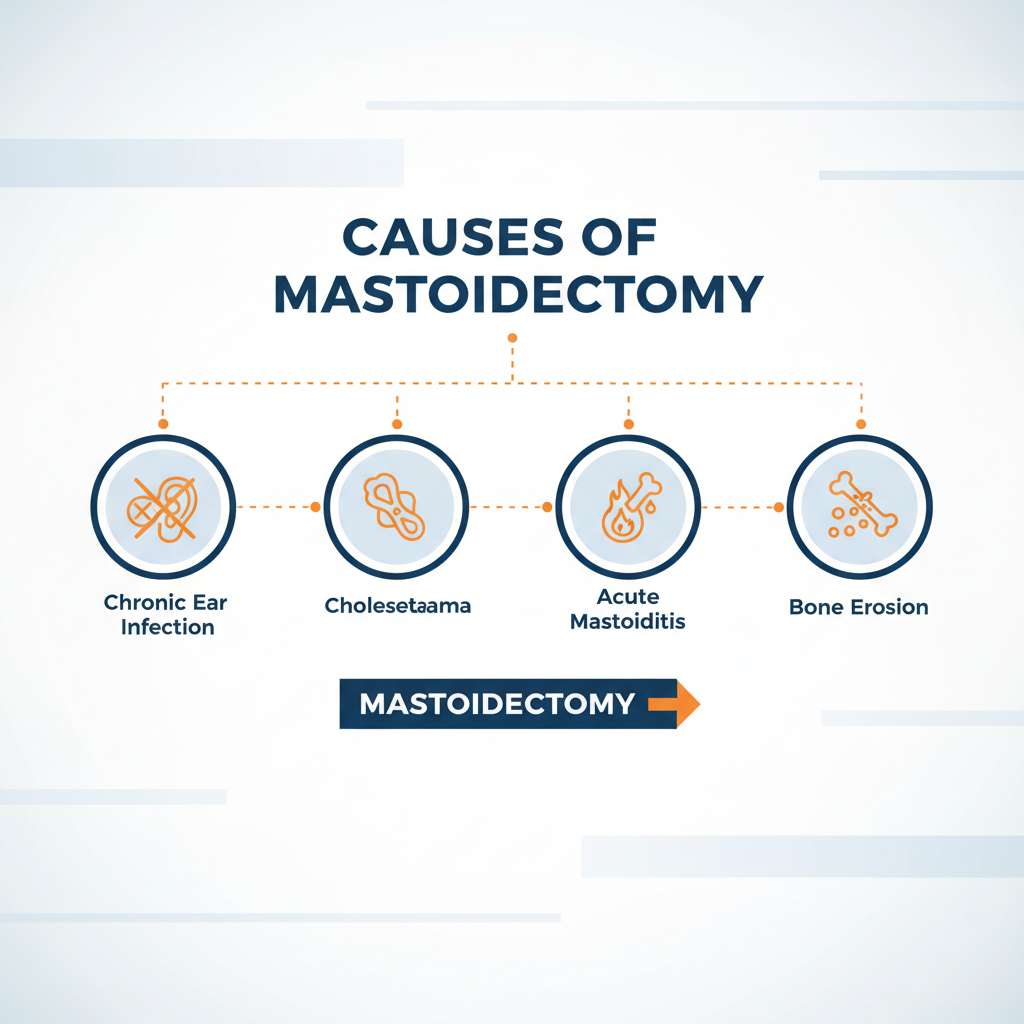
Ready to get the right care?
Who Is at Risk for Mastoidectomy?
Certain conditions and infections may increase the need for mastoidectomy surgery.

Chronic Ear Infections
People with recurring or untreated middle ear infections face a higher risk of mastoid bone involvement.

Cholesteatoma Cases
Individuals with abnormal skin cell growth in the middle ear often require mastoidectomy for safe removal.

Children with Otitis
Children prone to persistent otitis media are at increased risk of mastoid complications requiring surgical care.

Weakened Immunity
Patients with compromised immune systems are more vulnerable to severe ear infections affecting the mastoid bone.

The Critical Phase
The first 48–72 hours post-surgery are critical; close monitoring helps detect early complications like bleeding or infection promptly.
ALWAYS HOSPITALIZE HIGH-RISK PATIENTS
Complications
Understanding potential risks of mastoidectomy helps patients make informed decisions and supports safer, evidence-based surgical outcomes.

Hearing Loss
Temporary or permanent hearing changes may occur, though surgeons use advanced techniques to help preserve hearing function.

Facial Nerve Risk
The facial nerve runs near the mastoid; skilled surgeons use nerve monitoring to reduce the risk of facial weakness.

Infection Risk
Post-surgical infection is possible; antibiotic therapy and proper wound care significantly reduce this risk in most cases.

 Nearest Clinic
Mastoidectomy: Treatment & Recovery
Expert surgical care for mastoid infection with effective recovery support.

Surgical Process
Performed under general anesthesia to remove infected mastoid cells.

Post-Op Care
Keep the ear dry and follow prescribed antibiotic therapy closely.

Recovery Timeline
Most patients resume routine activities within a few weeks post-surgery.


Advanced In-Patient Care
Our specialists use advanced surgical techniques with high success rates, ensuring safer outcomes and faster recovery for most patients.
 CRITICAL ALERT
Avoid water in the ear and report fever, swelling, or hearing changes to your doctor promptly.
 NO Ibuprofen
 Avoid Flying
 No Ear Water
Consult a professional before any medication.
Immediate Action Required
Seek urgent care if you notice severe symptoms after mastoidectomy, as prompt treatment helps prevent serious complications.
 Emergency Hotline


Prevention: Your Best Protection
Early care of ear infections may help reduce the risk of mastoiditis.

Treat Ear Infections
Prompt antibiotic treatment of otitis media may help prevent spread to the mastoid bone.

Regular Ear Checkups
Routine ENT evaluations help detect early signs of infection before complications develop.

Vaccinations Matter
Staying updated on recommended vaccines may lower the risk of bacterial ear infections.

Avoid Self-Medication
Never ignore persistent ear pain; consult a doctor instead of self-treating at home.
What Our Patients Say
Based on 1 Recommendations | Rated 5.0 Out of 5



Your health is our
sole priority.
Need Expert Medical Consultation?
Our network of Mastoidectomy specialists are available for immediate clinical evaluation and personalized recovery planning.

Frequently Asked Questions
Mastoidectomy is a surgical procedure to remove infected mastoid air cells behind the ear. It treats chronic ear infections, cholesteatoma, and related complications using safe, modern surgical techniques.
It is recommended for chronic mastoiditis, cholesteatoma, or persistent ear infections unresponsive to antibiotics. Surgery helps prevent serious complications like hearing loss or spread of infection to nearby structures.
 Call Us
 Book Appointment


